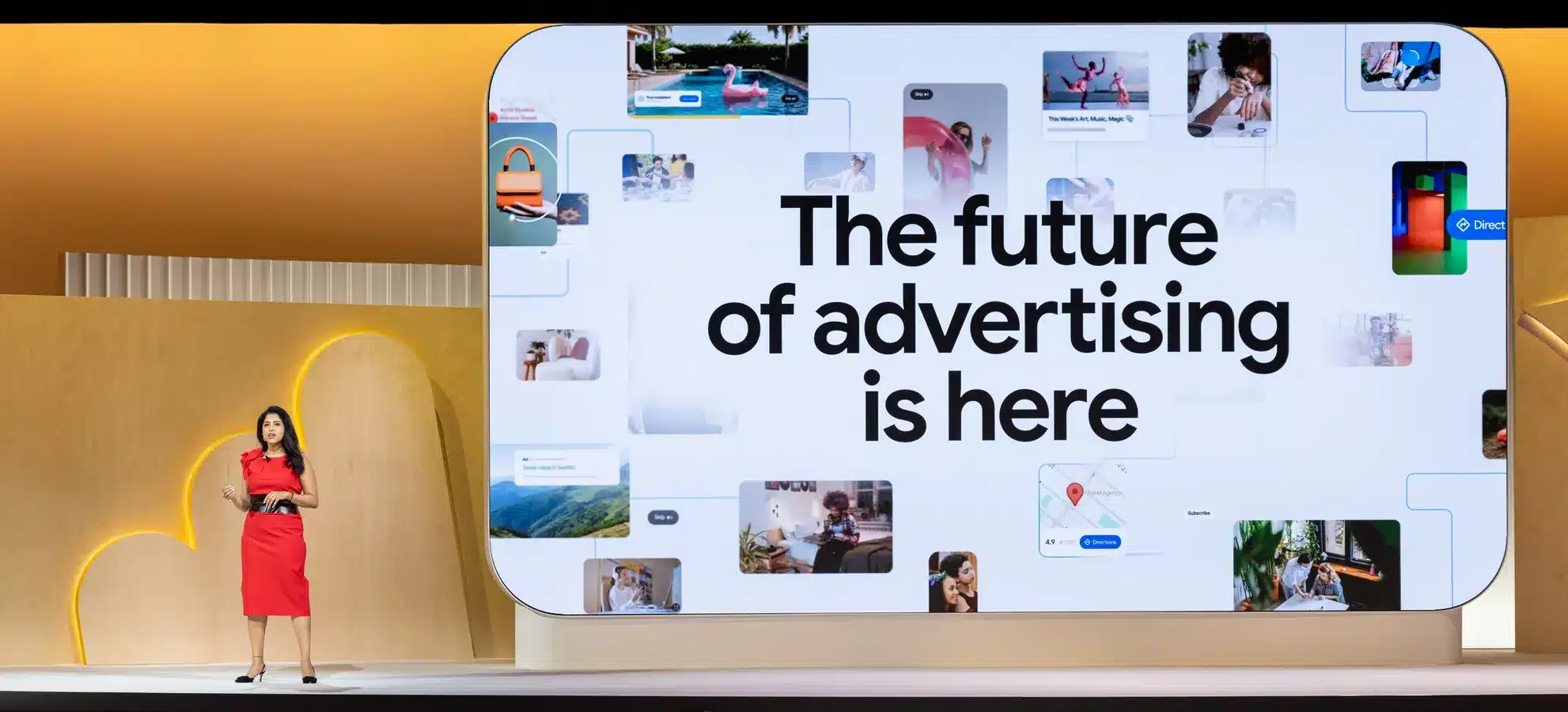
Google Marketing Live (GML) is Google’s annual flagship event for advertisers, offering a preview into their roadmap for the year ahead. It’s where advertisers can hear about new product announcements, and Google showcases real-world case studies from businesses using their products.
For PPC marketers, it is also one of the most useful moments in the calendar to take stock. Not every announcement will change the way we build campaigns tomorrow, but GML often gives us a very clear indication of where Google wants the industry to move next. It shows us which features are being prioritised, which campaign types are gaining momentum, and where advertisers may need to adapt their strategies over the coming months.
Back in 2025, we were introduced to AI Max for Search campaigns, Asset Studio, and Google tag Gateway, all of which have helped shape the way we run Google Ads accounts. It is therefore no surprise as to why advertisers across the world eagerly anticipated this year’s announcements.
Dexter and I tuned into the live stream of the event – which took place in the US on Wednesday 20th May – and dug through the mountains of news announcements and help documentation to bring you the key takeaways that we believe the PPC industry needs to know.
Ads in AI Mode
“We’re not just showing your ads. We’re framing your product as the answer.” – Vidhya Srinivasan
We all know that AI has truly reshaped Search, and AI Mode has been a pivotal way that Google has played a part in this change. In his keynote, Philipp Schindler even said that the number of searches in AI Mode have been doubling every quarter since it first launched.
For advertisers, that growth matters. It suggests that AI Mode is not just a side experiment or a temporary feature sitting alongside traditional Search. It is becoming a more central part of how users explore information, compare options and make decisions. That means advertisers need to start thinking seriously about how their brands, products and services appear within these more conversational, AI-led experiences.
It was therefore no surprise to see the Google Ads announcements leading with lots of new ad formats and features for Ads in AI Mode.
Here’s what caught my attention:
Powered by Gemini AI, new ad formats – Conversational Discovery ads and Highlighted Answers – are being tested in AI Mode, and are intended to close the gap between discovery and decision.
This could be particularly important for advertisers operating in categories where the buying journey is more research-led. If a user is asking a detailed question, comparing options or trying to understand which solution is right for them, these formats could give advertisers a way to appear much closer to the moment of consideration.
On a personal note, I’m pleased to see that ads within these AI-generated results will be clearly labeled. As advertisers, we naturally want to reach our target audiences, but it’s equally important that we do so in a transparent way that maintains user trust.
Business Agent for Leads will allow searchers to ask a question inside of an ad and then submit an enquiry using pre-filled fields.
This is currently available for education, real estate and automation advertisers only, but it could be very promising for Lead Gen advertisers. Anything that reduces friction between curiosity and enquiry has the potential to improve conversion rates, particularly on mobile, where lengthy forms can still be a major barrier.
The bigger question will be how much control advertisers have over the experience, how enquiries are qualified, and whether lead quality keeps pace with increased volume. As with many AI-led features, this will be one to test carefully rather than switch on and forget.
AI Brief is here to provide advertisers with the control they’ve been asking for.
It allows advertisers to provide a brief outlining key information such as business goals, audience personas, brand guidelines, and contextual insights, which is then interpreted to generate ad guidelines for Search campaigns. This will be available for Performance Max and AI Max for Shopping campaigns soon.
This is an encouraging move because it acknowledges one of the biggest tensions advertisers have with automation: we want the efficiency and scale of AI, but we also need brand context, commercial priorities and strategic nuance to be understood. If AI Brief can help bridge that gap, it could become an important part of campaign setup and optimisation.
Universal Cart makes it easier for shoppers to add items to their cart as they browse the internet, but still ensures the original merchant is still on the record.
I definitely want to test this out as a consumer. From an advertiser perspective, it could also change how we think about the path to purchase. If users can add products to baskets more fluidly across different touchpoints, advertisers will need to pay even closer attention to product data, feed quality, pricing, availability and the consistency of the shopping experience.
YouTube
Next up, the YouTube team reiterated the importance of advertisers needing to be where their audience are, and how to use creatives to turn passive scrollers into actively engaged users.
Starting off the announcements with the statement – “Stop choosing between brand building and Conversions. YouTube gives you both” – John Nicoletti and Nicky Rettke delivered these exciting product announcements:
Demand Gen ads are expanding to Google Maps.
This expansion is going to be music to the ears of brick and mortar businesses, as it is designed to help them to reach their target audience in the right moments and drive footfall exactly when their intent is at its highest.
For local advertisers, this could be especially powerful. Maps is already a high-intent environment. Users are often actively looking for somewhere to go, something to buy or a service nearby. Bringing Demand Gen into that space creates new opportunities to connect visual, discovery-led advertising with real-world action.
Demand Gen campaigns utilising product feeds are going to see an expansion to where their ads can surface, including tablet devices and YouTube Pause ads.
This is another reminder that Demand Gen is becoming harder to ignore. Google is clearly continuing to invest in the format and expand its reach across different surfaces. For advertisers who have historically focused on Search, Shopping and Performance Max, Demand Gen may need to play a larger role in the media mix.
GML was heavy on the Demand Gen announcements, so if you’ve not yet had a chance to play around with them, then it’s definitely time to give them a go.
The key here will be testing with a clear objective. Demand Gen can support discovery, consideration and conversion, but it needs strong creative, audience thinking and measurement foundations to work effectively. It should not simply be treated as another box to tick in the account.
Creatives
We all know the importance of creatives in our campaigns, but did you know that according to a Google study, great creatives drive 49% of incremental sales?
That statistic is a useful reminder that creative is not just the “nice” part of campaign management. It is a performance lever. As automation takes on more of the bidding, targeting and placement decisions, creative becomes one of the clearest areas where advertisers can still influence results in a meaningful way.
Here are some important takeaways for the use of creative assets in Google Ads:
Asset Studio – which already utilises Gemini, Veo 3.1 and Nano Banana – continues to advance with the upcoming integration of Gemini Omni.
It will also allow advertisers to more seamlessly integrate with other creative platforms, such as Adobe and Canva, for easier creative library management.
This should make creative production more accessible, particularly for smaller teams that do not always have large design resources available. However, it also raises the bar. If it becomes easier for everyone to produce more assets, then the real advantage will come from having a clear creative strategy, strong messaging and a deep understanding of what resonates with your audience.
One Click A/B Testing is coming to your creatives, allowing advertisers to make better decisions regarding their creative efforts.
I think that this is a fantastic way to help encourage advertisers to keep testing, improving their assets and driving better results. We all need an excuse to experiment and test more!
It is also a reminder that creative testing should be ongoing, not something that happens once at the start of a campaign. Small changes in messaging, format, hook, imagery or product framing can have a significant impact on performance. The easier Google makes it to test, the less excuse we have for relying on assumptions.
Data and Measurement
“None of the incredible AI innovations which you’ve seen here today matters if your measurement foundations aren’t there to capture it”. – Gaurav Bhaya
Gaurav Bhaya reminded us all of the importance of getting our data and measurement foundations in order, before getting too excited and jumping into testing new campaigns and features.
This was one of the most important messages from the event. AI-powered campaigns are only as effective as the signals they are given. If tracking is incomplete, conversion actions are poorly defined, first-party data is underused or reporting is fragmented, then even the most advanced campaign features will be working from a weak foundation.
Here are some of the key takeaways around Data and Attribution:
First party data is king – Reporting, optimisations and attribution can only be as strong as the data we are feeding the platforms, and the area where we have the most control here is our first party data.
For Google Ads specifically, according to their studies, advertisers who improved the strength of their data by using their own first-party data saw an 11% incremental increase in ROAS. A case study from Dr Martens showed that they saw a 16% increase when using their first-party data with Performance Max.
It’s really never been so important to ensure that you are feeding the platforms accurate and reliable data, so check out Google’s Data Manager to get your data in order.
For PPC teams, this means data quality can no longer be treated as a technical afterthought. It needs to be part of campaign strategy. The advertisers who are able to connect meaningful business data back into their platforms will be better placed to take advantage of automation, attribution modelling and predictive signals.
The importance of a unified picture across every channel was another major theme. To understand causality, two new signals are being introduced:
Attributed Branded Search – For when a customer sees an ad and then goes on to search for your brand. This signal shows that the ad helped to generate intent.
This could be a useful way of understanding how upper- and mid-funnel activity contributes to demand. Branded search is often treated as a separate performance channel, but in reality, it is frequently influenced by the ads, videos and touchpoints users have seen elsewhere.
Qualified Future Conversions – A longer term signal which predicts the future value of your campaigns, by looking at early signals of high-quality intent, such as branded searches.
This is particularly interesting for advertisers with longer sales cycles or higher-value conversions. Not every valuable interaction produces an immediate sale or lead, so better predictive signals could help advertisers make smarter decisions about budget and optimisation.
Meridian – Meridian is an open-source MMM, or Marketing Mix Modelling tool, designed to help businesses make more informed budget and planning decisions.
Google are now bringing Meridian into Google Analytics 360 as a turnkey solution, allowing advertisers to analyse cross-channel performance including Pinterest, TikTok and other social media platforms.
This matters because advertisers are increasingly being asked to justify spend across a complex mix of channels. Last-click reporting alone is rarely enough to explain what is really driving growth. A more accessible approach to MMM could help more businesses understand the role different channels play in the bigger picture.
What This Means for PPC Strategy
Taking the announcements together, there are a few clear themes for PPC marketers.
The first is that AI is becoming more deeply embedded in the search and shopping journey. This is not limited to campaign automation behind the scenes. AI is now shaping the user experience itself, from how answers are presented to how products are discovered and compared.
The second is that creative is becoming even more important. As Google expands Demand Gen, YouTube placements and AI-powered creative tools, advertisers will need to invest more time in asset quality, testing and storytelling.
The third is that measurement needs to catch up. If advertisers want to make the most of these new features, they need clean data, robust tracking, strong first-party signals and a better understanding of how channels work together.
Finally, advertisers need to get comfortable with testing. Many of these features will not be relevant to every account straight away. Some will roll out slowly. Some will need careful evaluation. But the direction of travel is clear, and PPC teams that wait too long to explore these changes risk falling behind.
Final Thoughts
This is by no means an exhaustive list of the new features and plans announced at Google Marketing Live and across Google Ads news channels, but these are the updates most likely to have the greatest impact on your Google Ads campaign management and strategy over the next 12 months.
The advertising landscape is constantly evolving, and the updates released at Google Marketing Live often help shape the direction of the wider PPC industry for the year ahead. So take the time to explore the latest announcements, keep an eye on the PPC Hero blog for deeper insights, and watch for new features rolling out in your Google Ads account.
It’s going to be an interesting year for PPC marketers!
That’s Sophie and Dexter, who fell asleep halfway through the announcements, over and out.
You can rewatch the full Google Marketing Live virtual event here.